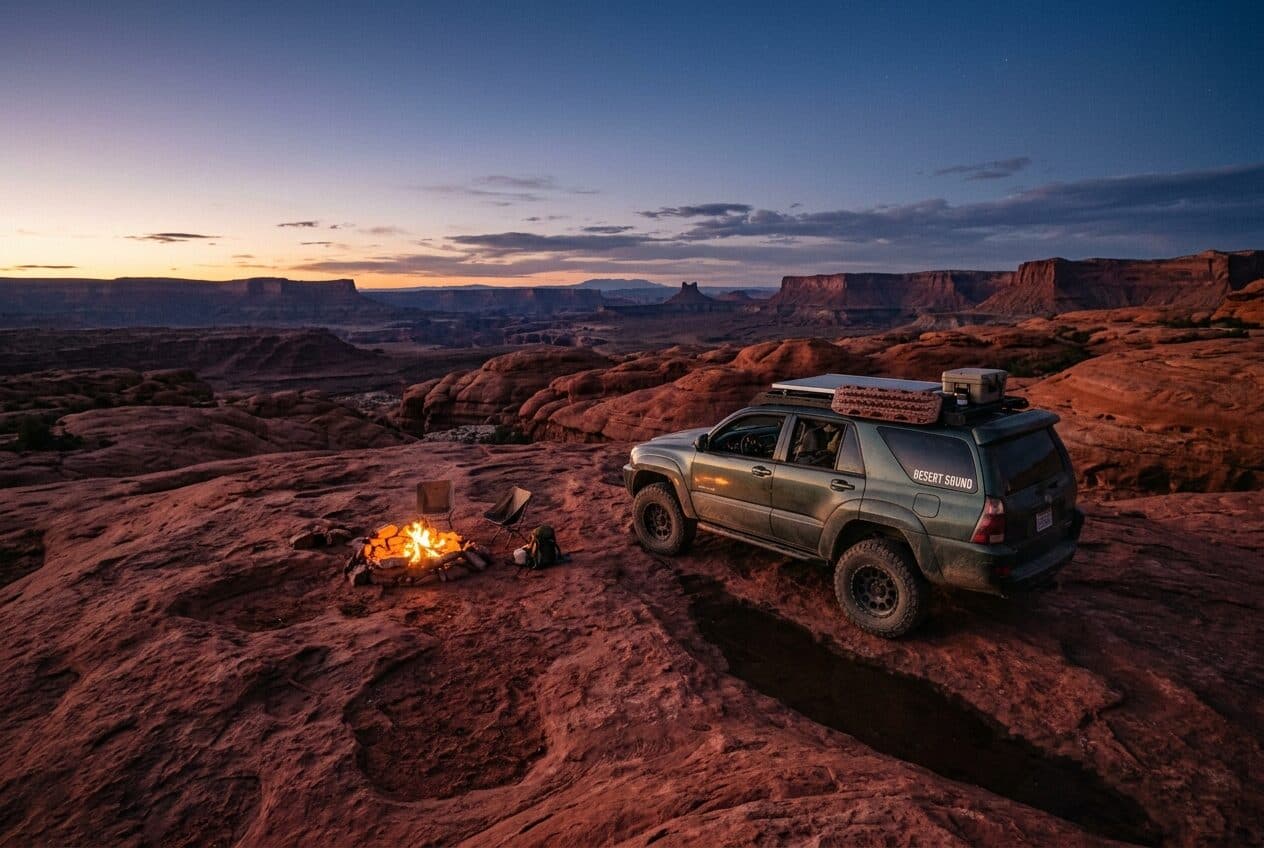
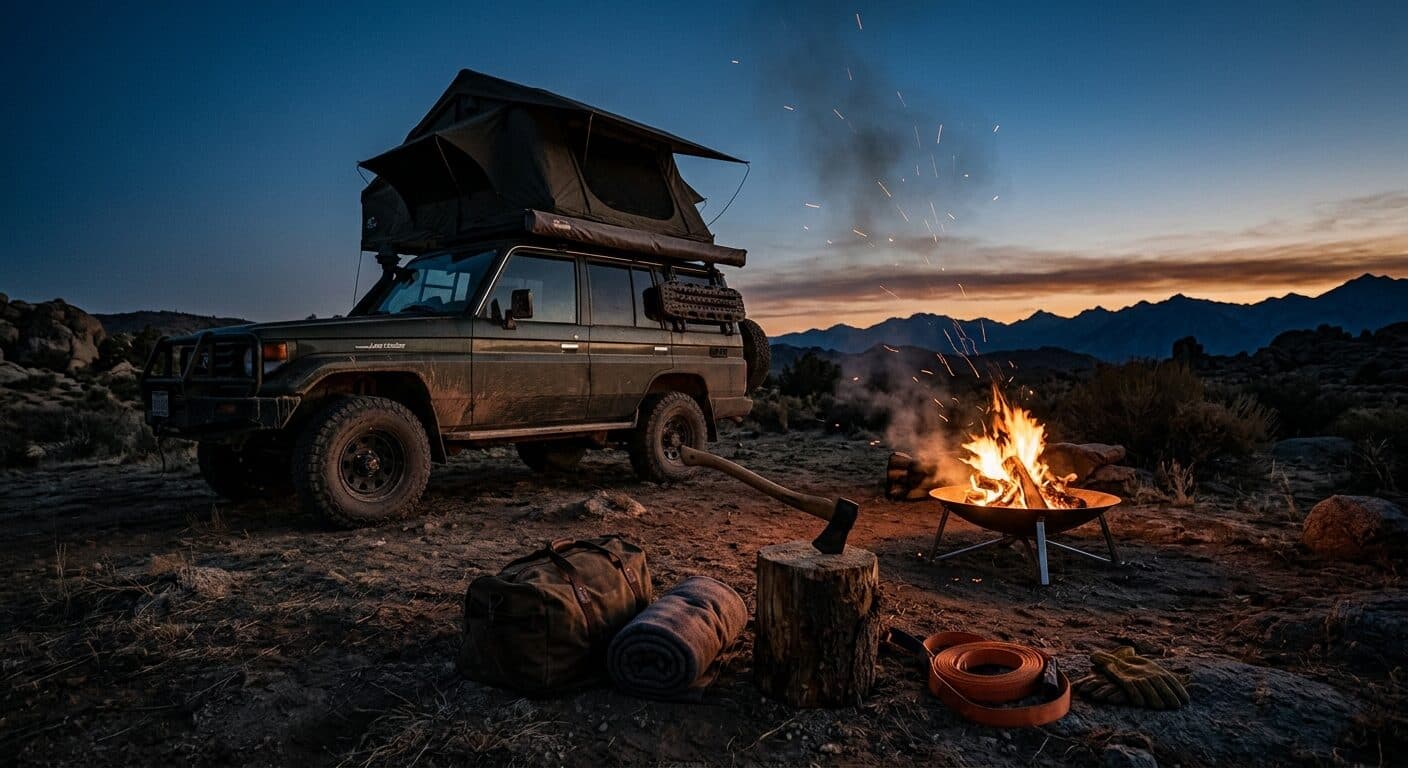
A campfire coffee ritual doesn't require good coffee. It requires ten unrushed minutes, a fire that's already going, and nowhere to be — which, if we're honest, is the part most of us are actually short on.
We didn't set out to build a whole philosophy around a pot of coffee. It just kept being the one part of every trip that made a random patch of dirt start to feel like somewhere we belonged.
Why the Ritual Matters More Than the Result
Basecamp culture gets treated like it's about gear — the right stove, the right grind, the right setup. It isn't, really. It's about the fact that the first twenty minutes of a morning at camp are the only twenty minutes of your week with nothing pulling at them.
The coffee isn't the point. The stillness before anyone needs anything from you is the point.
That's worth naming, because it's easy to rush past it — to break camp fast, get moving, treat the morning like a task instead of the reason you drove out here in the first place.
Building a Morning That Doesn't Get Skipped
A ritual that survives contact with a cold morning and a half-asleep brain needs to be simple enough that skipping it feels like more effort than doing it.
- Fire built the night before, ready to relight with minimal fuss
- Water on before boots go on, not after
- One cup, not a production — this isn't the morning for a pour-over kit you've never used before
We've found the difference between a ritual that sticks and one that fades after two trips usually comes down to friction. If it takes fifteen steps, it becomes optional. If it takes three, it becomes automatic.
A ritual you have to talk yourself into isn't a ritual. It's a chore with better scenery.
What the Fire Is Actually For
There's a version of camp culture that treats the fire as background — something to sit near while you scroll or wait for the food to cook. We'd push back on that a little. The fire's the whole reason the morning slows down at all.
This is also where something like an Ember & Smoke Candle earns a place at home between trips — not as a substitute for an actual fire, but as a way of carrying that same slow-down instinct into a weekday evening when the truck's parked and the week's still grinding.
The Cast Iron Isn't Optional
Basecamp culture has a material logic to it, and cast iron sits at the center of it — not because it's trendy, but because it does the one thing a camp kitchen actually needs: it works the same on day one and year ten.
- It heats evenly enough that a bad cook still gets a decent result
- It doesn't care about being dropped, scratched, or left out overnight
- It's one of the only pieces of gear that gets better with use instead of worse
Buy it once. Season it. Never think about it again.
The Social Version of the Ritual
Solo, the coffee ritual is stillness. With other people, it becomes something else — the one part of a group trip where nobody's performing, nobody's checking a phone, and conversation happens because there's genuinely nothing else competing for attention.
That's a harder thing to manufacture at home than most people admit. Basecamp culture, at its best, is just a group of people who've agreed, without saying so, to be somewhere on purpose for a little while.
Carrying It Home
The honest version of this: most of us aren't at camp most mornings. The ritual matters because of what it teaches you to want on the mornings you're not — a slower start, one task at a time, coffee that isn't consumed on the way to somewhere else.
That's less a camping habit and more a standard you start holding the rest of your life to.
If the ritual's worth building at camp, it's worth a version at home too — start with something that makes a Tuesday night smell like the fire you're headed back toward.