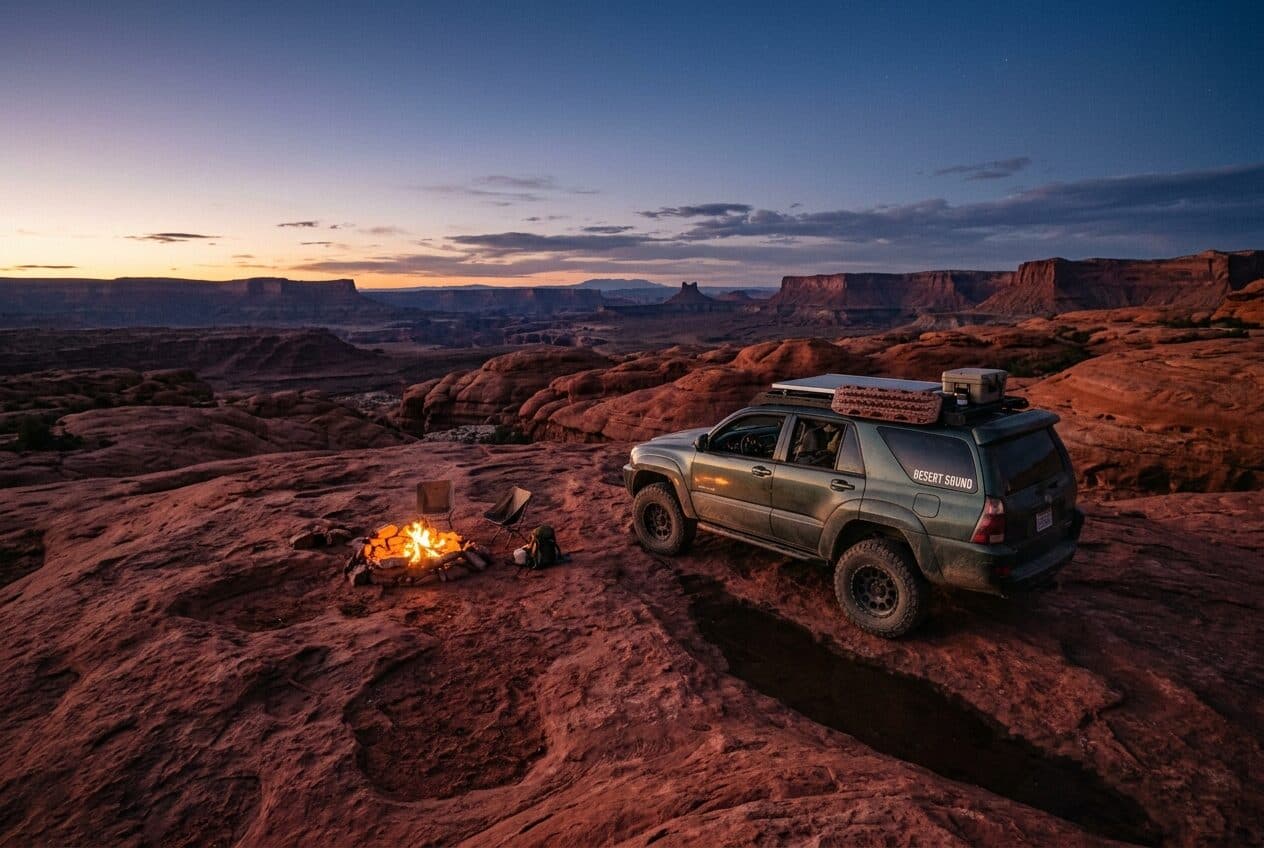
One-pot camp dinners aren't a compromise. They're the whole point — one skillet over a real fire, no packet mixes, no dishes piling up while you're trying to enjoy the one night you drove out here for.
We got tired of the two extremes: the freeze-dried pouch that tastes like nothing, and the ambitious multi-pan spread that turns dinner into an hour of dish duty nobody signed up for. There's a middle ground, and it's genuinely better than either.
The Case for One Pan
Camp cooking gets complicated when people bring a home-kitchen mindset to a fire and a single burner. The fix isn't more gear. It's fewer moving parts.
- One cast iron skillet handles searing, simmering, and finishing in the same pan
- Ingredients that cook at similar rates mean less babysitting, more time by the fire
- Fewer dishes means the night ends at the fire, not at the wash bin
A good camp dinner should end with you sitting down, not scrubbing a pot by headlamp.
What Actually Works Over a Fire
Not every recipe translates to open flame or a camp stove. The ones that hold up share a few things in common: they forgive uneven heat, they don't need precision timing, and they taste better, not worse, for having been cooked outside.
- Something that starts with fat and aromatics — onion, garlic, a spoon of oil — because that base carries a dish through inconsistent heat
- A protein that can go in early and just sit, rather than one that needs to be pulled at an exact moment
- A starch or vegetable that finishes in the same pan, so nothing's waiting cold on a plate
That's it. That's most of what separates a genuinely good camp dinner from a sad one.
The Gear That Actually Matters
We're not going to pretend a fancy setup makes the food better. It doesn't. What matters is durability — gear that works the same whether it's your first trip or your fiftieth.
The best camp kitchen is the one you stop thinking about.
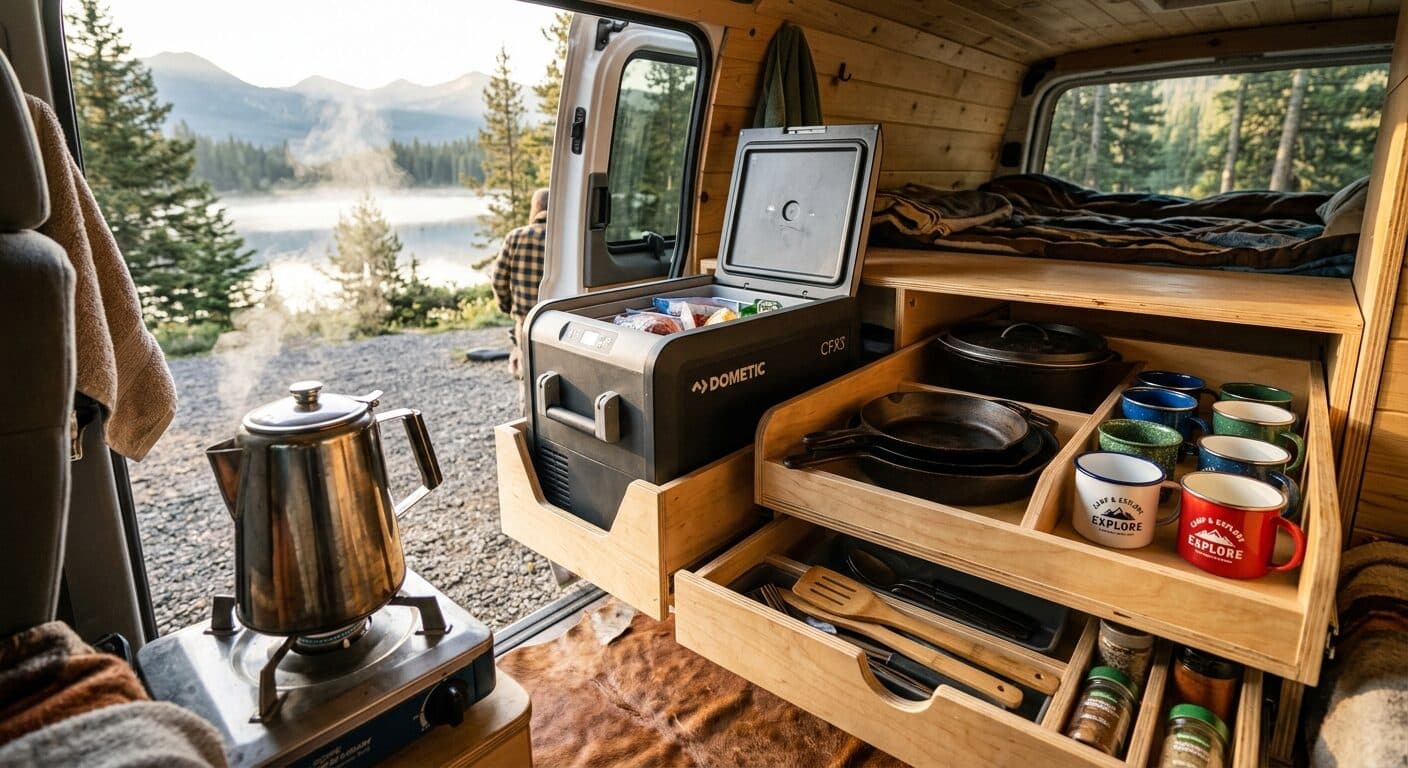
A well-seasoned skillet, a solid pair of tongs, and a knife that holds an edge will outlast almost anything trendier you could buy instead. This is buy-it-for-life territory, not gadget territory.
The Fireside Drink That Follows
Dinner's rarely the whole ritual. What comes after — something warm in hand, the fire dying down, no reason to move — is arguably the better half of the night.
- A splash of something dark in a metal cup beats glass every time out here
- Hot water and a bag of something simple works fine when you'd rather stay warm than get fancy
- The point isn't the drink. It's the excuse to stay at the fire another thirty minutes
The second cup is never about being thirsty.
When It's Cold Enough to Matter
Camp cooking changes character once the temperature drops — hands get clumsy, everything takes longer, and the instinct to rush dinner and get in the tent gets stronger. That's usually the wrong instinct. A good dinner, taken slow, is one of the better ways to actually get warm before you turn in, and a Workhand Salve worked into cracked knuckles after cleanup does more for the next morning than people give it credit for.
Provisions as Discipline, Not Indulgence
There's a version of camp cooking that's about showing off — elaborate spreads, ingredients that don't survive a cooler, more effort than the trip called for. We'd rather treat provisions the way we treat everything else out here: intentional, not excessive.
That's not about deprivation. It's about a dinner that earns its place in the pack, cooked in one pan, eaten slow, with nothing left to clean but the fire.
Next trip's dinner starts with one good skillet — build the rest of the kit around it, not the other way around.