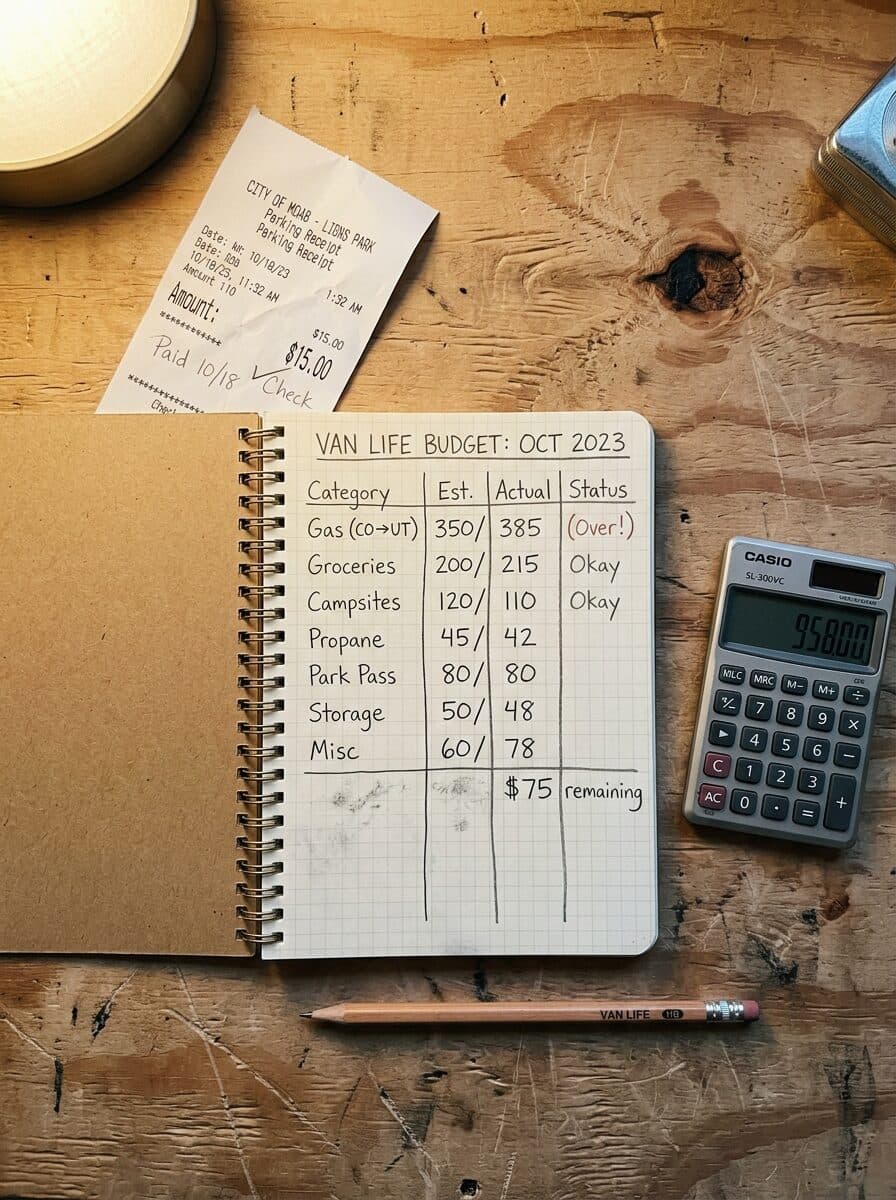
Van build budget planning is the part of this whole thing nobody posts about. Not the finished rig, not the sunset shots — the spreadsheet, the slow saving, the months where the plan is invisible because it's just numbers moving in the right direction.
We'd rather talk about that part, because it's the part that actually determines whether any of this happens.
The Gap Between the Photo and the Plan
Every off-grid build you've scrolled past online is the end of a story you didn't see the start of. What gets left out is the boring middle — the years of figuring out what this actually costs, and building a plan that survives contact with real life.
Nobody posts the spreadsheet. The spreadsheet is why the photo exists at all.
That gap is worth naming honestly, because it's easy to mistake the absence of visible planning for the absence of planning altogether.
What a Long Horizon Actually Requires
A ten-year plan isn't ten years of sacrifice. It's a series of smaller, honest decisions that compound — decisions that are easier to make when you can actually see where the money's going.
- Knowing the real cost of a build before you're mid-project and out of runway
- Separating what's actually necessary from what's aspirational-but-not-yet
- Building in slack for the parts that always cost more than the forums say they will
Tracking every dollar from empty shell to something livable, from the very first spreadsheet, is what turns a someday plan into a build with an actual timeline.
The Technical Stuff You Shouldn't Wing
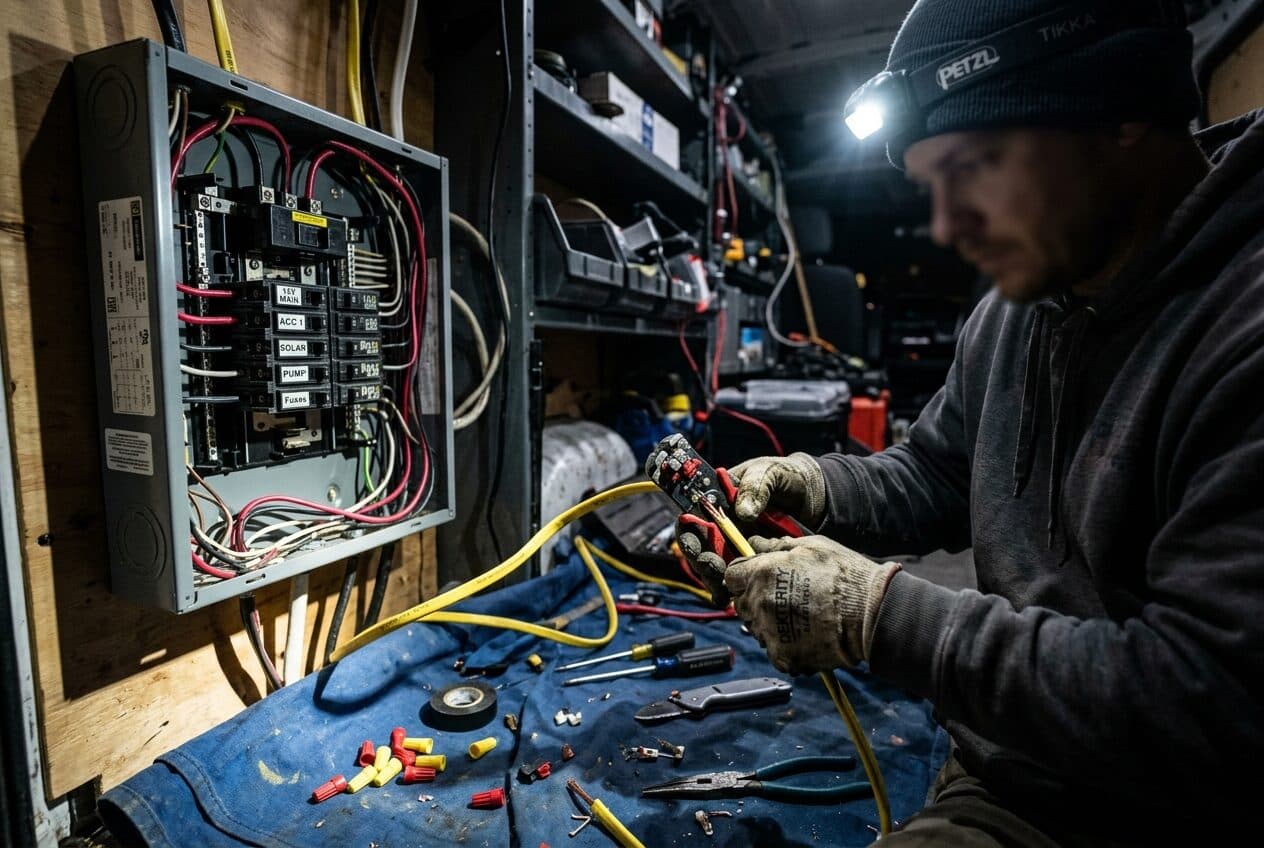
Budgeting long-horizon builds gets harder once you hit the systems that actually keep a rig livable — power, insulation, ventilation. This is where we'd rather be upfront: we're not electricians, and we're not treating this as anything close to professional guidance.
The community consensus is worth more here than any single confident voice — including ours.
What's worth doing instead is compiling what the forums, the YouTube builders, and the broader off-grid community generally land on, laid out plainly enough to budget around before you're mid-build and guessing — compiled research, not certified engineering, and worth verifying against a licensed professional before anything gets wired for real. Insulation and ventilation carry the same caveat.
Why Slow Money Beats Fast Money
There's a version of this that tries to rush the timeline — bigger loan, faster build, less planning. We've seen that version burn people out before the rig's even finished, let alone lived in.
- A build funded slowly tends to get finished, because the pressure to recoup a large loan isn't sitting on top of every decision
- A longer runway means more time to actually research the systems that are expensive to get wrong
- Patience here isn't a compromise — it's usually the faster path when you count the redo work skipped along the way
The slow version of this plan is also, almost always, the cheaper one.
Holding the Line for Ten Years
The hardest part of a long horizon isn't the math. It's the discipline to keep making small, unglamorous decisions in year two and year five, long after the initial motivation has worn off and the finished rig still feels far away.
That's less a financial problem than a values one — deciding, repeatedly, that the life you're building toward is worth more than whatever's easier right now.
The Point of Tracking Any of This
None of this is about turning a passion project into a spreadsheet exercise for its own sake. It's about giving the long horizon a fighting chance against everything that quietly derails it — impatience, scope creep, a budget that was never honest to begin with.
Run your own numbers before the next big decision — the ten-year version of this only works if the math was honest from year one.